Payment Tools
Accepting Bitcoin at the Point of Sale: A Guide for Canadian Businesses
How Canadian businesses can set up a bitcoin POS system, accept bitcoin in person, and handle the tax and compliance basics.
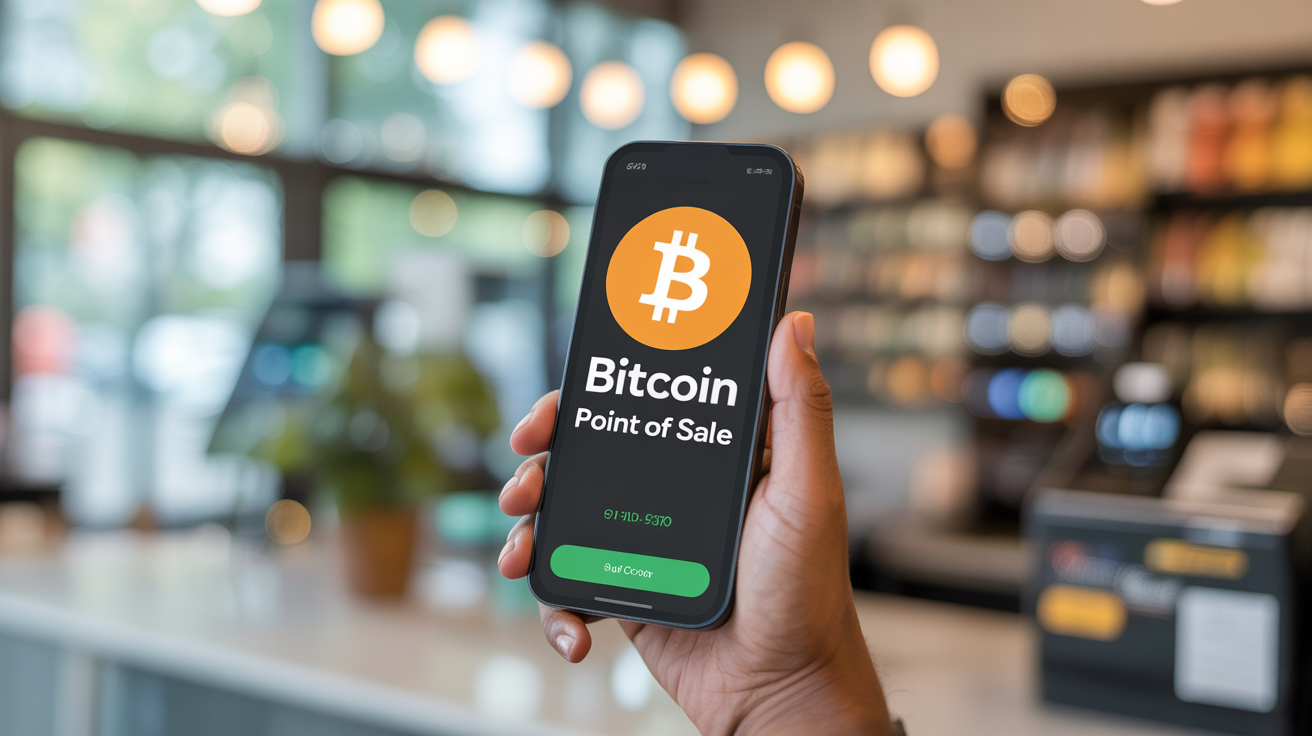
Taking bitcoin payments in person is simpler than most business owners expect. You don't need dedicated hardware or a specialized terminal; a tablet, a phone, or even a laptop can handle it. What you do need is a clear picture of the options, some basic bookkeeping habits, and an understanding of where Canadian regulators fit in.
This guide covers the main approaches Canadian merchants use to set up a bitcoin POS, what to watch for on the compliance side, and some practical questions worth thinking through before your first transaction.
How in-person bitcoin payments actually work
When a customer pays with bitcoin at a physical location, the flow is:
- You generate a payment request (an amount in CAD converted to BTC at the current rate, plus a receiving address or Lightning invoice).
- The customer scans a QR code with their wallet app and confirms the payment.
- Your POS tool receives a notification: instantly if you're using the Lightning Network, or after one or more on-chain confirmations if it's a standard transaction.
The speed difference between on-chain and Lightning matters for retail. A coffee shop probably wants Lightning. A mechanic accepting a $900 payment can afford to wait for a confirmation or two.
POS setup options for Canadian merchants
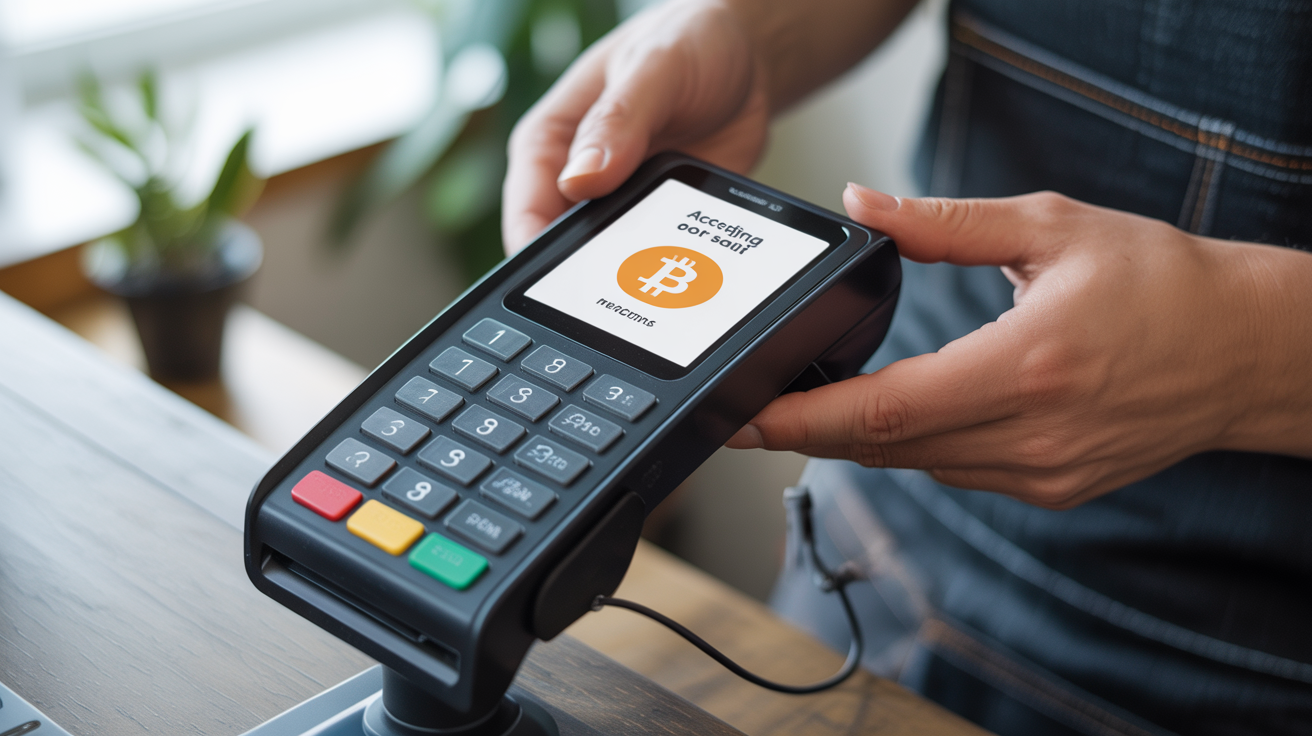
There's no single right answer here. The setup that works for a farmers' market vendor is different from what a restaurant or a professional-services firm would choose. A few common approaches:
Software-only (tablet or phone)
The most accessible entry point. Apps like BTCPay Server's mobile-friendly interface, or hosted processors that offer a POS screen, let you turn a tablet into a crypto POS with no extra hardware. You enter the CAD amount, the app converts it, displays a QR code, and waits for payment.
For a deeper look at which processors have solid Canadian support, see the best bitcoin payment processors for Canada businesses.
Self-hosted BTCPay Server
BTCPay Server is free, open-source software you run on your own server (or a VPS). It has a built-in point-of-sale interface that works on any browser. Running it yourself means no third-party fees and no custodial risk, but it does require some technical setup and ongoing maintenance.
If you're deciding between hosted and self-hosted tools, the tradeoffs are covered in more depth at custodial vs self-custodial bitcoin payment tools.
Hosted payment processors with a POS mode
Several hosted processors offer a dedicated POS view, a full-screen app that staff can use without access to any account settings. These tend to be easier to set up, though you're trusting a third party to handle the payment flow and (in some cases) hold funds briefly before they're swept to your wallet.
Hardware terminals
A small number of specialized devices run crypto POS software on dedicated hardware. These aren't widely used in Canada yet, but a few providers ship internationally. The main advantage is a purpose-built experience; the downside is cost and the fact that the software ecosystem is narrower.
Handling the Canadian dollar conversion at the till
Bitcoin's price moves. This matters for in-person payments because you're typically quoting in CAD and converting at the moment of sale.
Most bitcoin POS systems pull a live exchange rate from one or more price feeds and apply it when you generate the invoice. The customer has a short window (often 15 to 30 minutes) to pay at that rate before the invoice expires. That window is usually enough for an in-person transaction, but it's worth understanding the setting in whatever tool you're using.
Some merchants choose to build in a small buffer (a percent or two) to absorb short-term volatility between the moment of payment and when they actually convert to CAD. Others accept the exposure, particularly if they intend to hold some bitcoin rather than convert immediately.
There's no universally correct approach here. It depends on your margins, how quickly you process settlements, and your own tolerance for price movement.
Tax and bookkeeping basics (CRA perspective)
The Canada Revenue Agency treats bitcoin as a commodity, not a currency. That has a few practical implications for businesses accepting it at the point of sale.
GST/HST still applies. If your business is registered for GST/HST, you collect it on the CAD value of the sale, same as you would for any other payment method. The fact that the customer paid in bitcoin doesn't change the tax treatment of the underlying sale.
Each transaction may trigger a capital gain or loss. When you receive bitcoin and later convert it (or spend it), the difference between what you received it for and what you disposed of it for can be a taxable event. Your cost basis is the CAD fair market value at the time of receipt. This is where clean records matter. You need the date, the CAD value at receipt, and the amount of BTC for every transaction.
FINTRAC registration may apply. If your business is exchanging or transferring virtual currencies as a core activity, you may need to register as a Money Services Business with FINTRAC. Accepting bitcoin as payment for goods or services is generally different from operating as an exchange, but the line isn't always obvious in edge cases. Check current FINTRAC guidance directly, or get advice from someone familiar with Canadian financial regulations.
None of this is tax or legal advice, and the rules do change. Confirm current CRA and FINTRAC requirements before you start processing payments, and consider talking to an accountant who has worked with crypto businesses in Canada.
Practical checklist before your first in-person bitcoin sale
| Step | What to do |
|---|---|
| Choose a POS tool | Software-only, hosted processor, or self-hosted BTCPay |
| Set up a wallet | Decide whether the tool holds funds or sweeps directly to your wallet |
| Test the flow | Run a small internal test transaction before going live |
| Record keeping | Note the CAD value, BTC amount, date, and exchange rate for each sale |
| Staff training | Make sure whoever runs the till knows how to generate an invoice and confirm payment |
| Refund policy | Decide in advance how you'll handle refunds (BTC back? CAD?) |
| GST/HST | Confirm you're collecting tax correctly on the CAD value |
| FINTRAC check | Confirm whether your business activity triggers registration requirements |
FAQ
Do I need special hardware to accept bitcoin in person?
No. A smartphone or tablet running a POS app is enough for most merchants. Some businesses prefer dedicated hardware for a cleaner customer experience, but it's not required. A QR code on a screen is all the customer needs to pay from their wallet.
How long does a bitcoin payment take at the point of sale?
It depends on the method. Lightning Network payments settle in seconds. Standard on-chain transactions show as unconfirmed almost immediately, but you typically wait for one confirmation (roughly 10 minutes on average, though it varies) before considering the payment final. For small purchases, many merchants accept zero-confirmation transactions from their regular customers. For large amounts, waiting for at least one confirmation is the safer approach.
Can I accept both bitcoin and regular card payments?
Yes. Nothing stops you from running a traditional card terminal alongside a bitcoin POS setup. Many merchants simply add bitcoin as an option rather than replacing their existing payment methods.
What exchange rate do I use for my receipts and tax records?
Use the CAD fair market value of the bitcoin at the time of the transaction. Most POS tools display and record this automatically. The CRA expects you to use a reasonable, verifiable rate — the rate from a major exchange at the time of the transaction is generally acceptable. Keep records of where the rate came from.
What happens if the price drops between when I receive bitcoin and when I convert it?
That difference is typically treated as a capital loss for tax purposes (or a capital gain if the price went up). How significant this is depends on how long you hold the bitcoin before converting. If you convert immediately through an integrated processor, the exposure is minimal. If you hold, you're taking on price risk. Again, talk to an accountant who knows Canadian crypto tax treatment — the specifics matter.
This article is for educational purposes only. Accept Bitcoin Canada is an independent educational resource not affiliated with any wallet, exchange, or payment processor mentioned here. Nothing here is financial, tax, or legal advice. Rules and regulations change; confirm current guidance from CRA and FINTRAC directly before making any business decisions.