Getting Started
Bitcoin ATMs in Canada: How They Work and What Merchants Should Know
Canada hosts one of the world's largest bitcoin ATM networks. Learn how these machines work, what FINTRAC requires of operators, the fees involved, and how t...
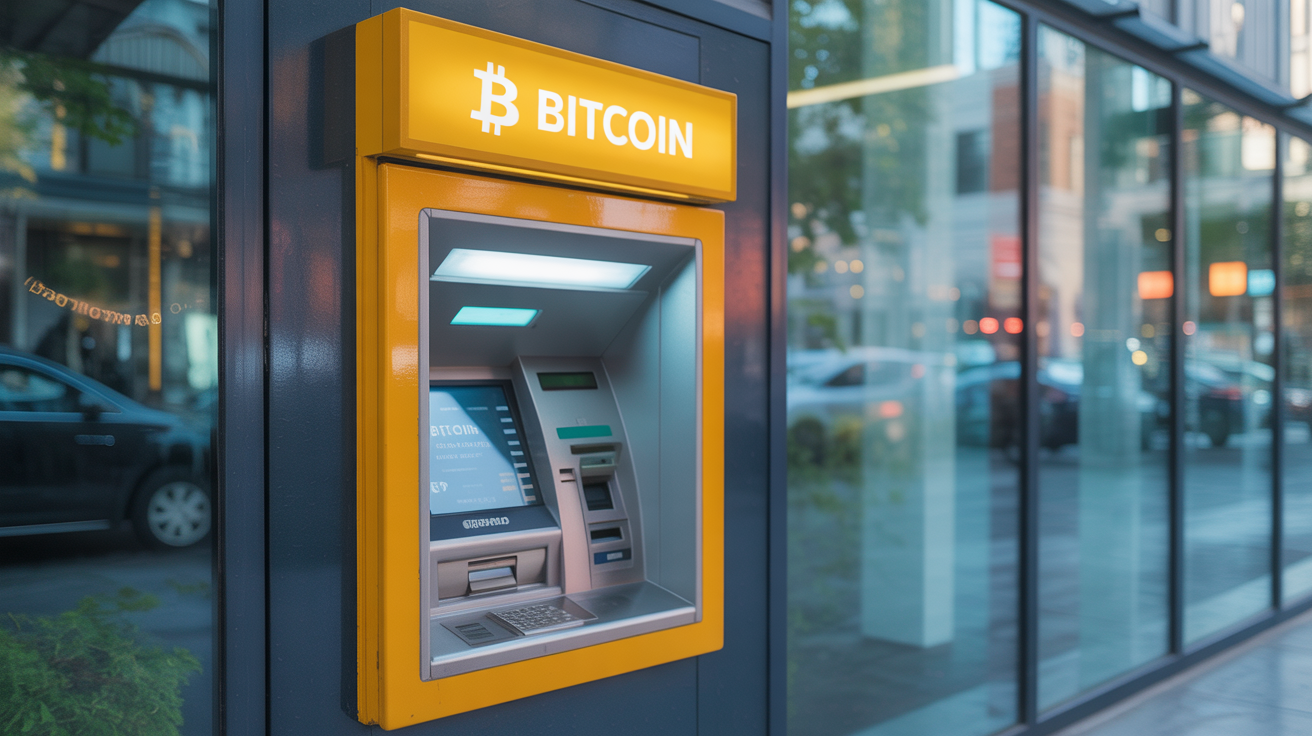
Canada has one of the densest bitcoin ATM networks in the world, with machines spread across shopping malls, convenience stores, and gas stations from Vancouver to Halifax. For a merchant who is new to bitcoin, these machines are worth understanding on two fronts: they are a visible on-ramp that some of your customers already use, and they are one option for converting received bitcoin back to Canadian dollars without opening an exchange account. This guide covers the mechanics of how bitcoin ATMs work, who regulates them, what you actually pay in fees, and how the Canada Revenue Agency treats the transactions they produce.
How Bitcoin ATMs Work
A bitcoin ATM (sometimes called a CATM, short for crypto ATM) is a kiosk that lets you exchange cash for bitcoin or, on two-way machines, exchange bitcoin for cash. The experience differs from a bank ATM in a few important ways.
Buying bitcoin (cash to BTC). You insert Canadian dollar bills, enter or scan the QR code for your bitcoin wallet address, and the machine broadcasts a transaction to the Bitcoin network. The BTC arrives in your wallet, usually within minutes for smaller amounts, though confirmation times depend on network conditions. If you want to understand what happens on the network side, how bitcoin payments work step by step walks through the mechanics in detail.
Selling bitcoin (BTC to cash). Two-way machines run this in reverse. You tell the machine how much cash you want, it generates a wallet address for you to send bitcoin to, and once the network confirms the transaction the machine dispenses bills. Some machines issue a paper voucher that you redeem at a teller rather than dispensing cash directly.
Identity verification. Machines in Canada typically tier their requirements. Transactions under a certain threshold may require only a phone number. Above that, a government-issued ID scan is standard. At higher amounts, some operators also require a selfie or additional document review. The exact thresholds vary by operator and are subject to change, so check the on-screen prompts before you start.
Wallet setup. If you do not already have a wallet, you cannot use a bitcoin ATM productively. The machine needs somewhere to send the BTC. Setting up your first bitcoin wallet to get paid covers the basics for anyone starting from scratch.
FINTRAC Registration and What It Means for Operators
Every company that operates a bitcoin ATM in Canada must register with FINTRAC as a Money Services Business (MSB) under the Proceeds of Crime (Money Laundering) and Terrorist Financing Act. This requirement has been in place since 2014 and was strengthened in 2020 to explicitly cover virtual currency dealers and ATM operators.
Registration means operators must:
- Verify customer identity above the applicable thresholds
- Keep records of transactions
- Report suspicious transactions and large cash transactions to FINTRAC
- Maintain a compliance program with written policies and a designated compliance officer
In practice, this means the machine you walk up to is not anonymous. The operator has records of the phone number used, the wallet address the transaction went to, the amount, and in many cases your ID scan. That data is retained and can be shared with regulators or law enforcement under the applicable rules.
For merchants, the FINTRAC registration of ATM operators is relevant background, not a direct obligation. A merchant who simply directs a customer to a nearby ATM is not themselves operating an MSB. However, if your own business involves receiving bitcoin and regularly converting it through mechanisms that look like a money service, the picture is more nuanced. FINTRAC rules for businesses that accept bitcoin covers where the line sits for ordinary merchants.
The two largest ATM operators in Canada are Localcoin and Bitaccess. Both are FINTRAC-registered MSBs. Localcoin operates hundreds of machines predominantly in Ontario and British Columbia. Bitaccess operates machines under the Instacoin brand as well as its own network. Other smaller regional operators also hold FINTRAC registration, and the full list of registered MSBs is publicly searchable on the FINTRAC website.
Fees, Limits, and the Paper Trail
Bitcoin ATM fees are high relative to online exchanges. A margin of 5% to 10% above the spot price is common for purchases. Some machines stack a flat service fee on top of the percentage. For selling bitcoin (cashing out), the spread can be similar or wider. The exact rate is displayed on screen before you confirm, so you can see what you are agreeing to.
Daily and per-transaction limits vary by operator and by your verification level. A user who has completed full ID verification can typically transact more per day than one who provided only a phone number. Operators set these limits partly to comply with their FINTRAC obligations and partly as internal fraud controls.
The paper trail that an ATM creates matters for anyone keeping proper books. Each transaction generates a receipt showing the date, amount in CAD, the exchange rate used, and the wallet address involved. Operators retain records on their end as well. For CRA purposes, this receipt is evidence of the cost base of the BTC you acquired, or the proceeds you received if you cashed out. Keeping those receipts is the same discipline as keeping any other business receipt.
Note that how long a bitcoin payment takes to confirm is relevant if you are selling BTC at an ATM and wondering why the cash has not dispensed yet. The machine waits for at least one network confirmation before releasing funds, and during periods of high network activity that wait can stretch.
What Merchants Should Know Before Directing Customers to an ATM
Some merchants in retail or hospitality have experimented with pointing customers toward a nearby ATM rather than setting up their own payment infrastructure. The appeal is straightforward: low setup effort on the merchant's end. The limitations are worth knowing before you make it a habit.
You do not receive BTC directly. When a customer uses an ATM to buy bitcoin so they can pay you, that is two separate steps. The customer buys BTC at the ATM (paying ATM fees and spread), then sends it to your wallet address. There is no shortcut that bypasses the network confirmation step.
ATM fees come out of your customer's pocket. A customer who buys $100 CAD of bitcoin at a machine charging an 8% fee ends up with roughly $92 worth of BTC to send you. If you are pricing in CAD, the customer is absorbing the ATM cost. That is not necessarily a problem, but it is worth being transparent about.
Cashing out your received BTC at an ATM. If you receive bitcoin from customers and want to convert it to CAD, an ATM is one option, but the fees make it an expensive one for regular use. For merchants running any volume, a registered Canadian exchange account with direct bank settlement is typically more cost-effective. The ATM option is mainly practical for occasional or small conversions.
Machine availability is not guaranteed. ATMs run out of cash, go offline for maintenance, or are removed. Building a customer payment process that depends on a specific machine carries reliability risk.
How the CRA Treats Bitcoin ATM Transactions
The CRA's general position is that bitcoin is a commodity, not currency, for tax purposes. That characterization shapes how ATM transactions are treated.
When you buy BTC at an ATM. The CAD you spend becomes the adjusted cost base (ACB) of the bitcoin you receive. You subtract the ATM fees if you can document them, since those costs form part of what you paid to acquire the asset. Keep the receipt.
When you cash out BTC at an ATM. Sending bitcoin to a machine and receiving CAD is a disposition of property. The proceeds are the CAD you receive. The gain or loss is the difference between those proceeds and your ACB for that portion of BTC. Whether that gain is treated as a capital gain or business income depends on the context of how you hold and use BTC in your business.
BTC received as payment for goods or services. If a customer pays you in bitcoin and you later cash out through an ATM, the two events are separate for CRA purposes. At the moment you receive BTC as payment, the fair market value in CAD on that date is business income. When you later convert that BTC to cash, any movement in value between receipt and conversion is a further gain or loss on disposition. You are tracking two separate tax events, not one.
GST/HST. The supply of your goods or services to the customer is still taxable in the normal way. The fact that payment arrived as bitcoin rather than dollars does not change whether GST or HST applies to the sale. You convert the BTC value to CAD at the exchange rate on the transaction date for reporting purposes.
These are general descriptions of how the CRA's framework applies. Tax treatment depends on your specific circumstances, and rules can change. Consult a tax professional or the CRA directly before filing.
Frequently Asked Questions
Do I need to report my bitcoin ATM transactions to the CRA?
Any disposition of bitcoin, including cashing out at an ATM, is a reportable event for income tax purposes. The fact that the transaction happened at a physical machine rather than an online exchange does not change your reporting obligation. Keep your receipts as supporting documentation.
Are bitcoin ATMs in Canada regulated?
Yes. All bitcoin ATM operators in Canada must register with FINTRAC as Money Services Businesses and comply with anti-money-laundering and know-your-customer requirements. The machines are not unregulated cash machines.
Why are bitcoin ATM fees so high compared to exchanges?
ATMs carry costs that online exchanges do not: physical installation, cash handling, maintenance, and the overhead of in-person identity verification. Operators pass those costs into the spread between the market price and the rate the machine offers. If fee minimization matters to you, a Canadian exchange account with bank-linked settlement will almost always be cheaper per transaction.
Can a merchant use a bitcoin ATM to accept payment from a customer in real time?
Not directly. The ATM sells BTC to the customer; the customer then sends that BTC to your wallet. That second step requires a network confirmation, which takes time and is not instant. How long a bitcoin payment takes to confirm explains the confirmation process for anyone planning a payment flow that involves this sequence.
Do bitcoin ATM operators share transaction records with the CRA?
FINTRAC-registered operators are required to report certain transaction types to FINTRAC, not directly to the CRA. However, FINTRAC can share financial intelligence with the CRA under the applicable legislation. The practical takeaway is that ATM transactions are not private, and your own records should match what the machine recorded.